

The technological landscape is in constant flux, and 2026 promises significant advancements that will reshape software development and DevOps practices. At Radiyal, we are keenly observing these shifts to ensure our solutions remain at the forefront of innovation, delivering cutting-edge results for our clients. This article explores the pivotal development trends anticipated to define the year 2026.
The Rise of Agentic AI in the SDLC
One of the most transformative trends is the integration of Agentic AI across the Software Development Life Cycle (SDLC). Unlike traditional AI tools that primarily assist, agentic AI systems are designed to work autonomously towards a defined goal with minimal supervision. This includes tasks such as planning steps, utilizing various tools, and even preparing pull requests for review. This evolution signifies a move beyond simple code autocompletion to AI agents capable of addressing issues, running checks, and streamlining the entire development pipeline. For development teams, this translates to reduced toil from repetitive tasks, allowing engineers to dedicate more time to critical decision-making and innovative design.
Semantic Layers and Ontologies for Enhanced AI Context
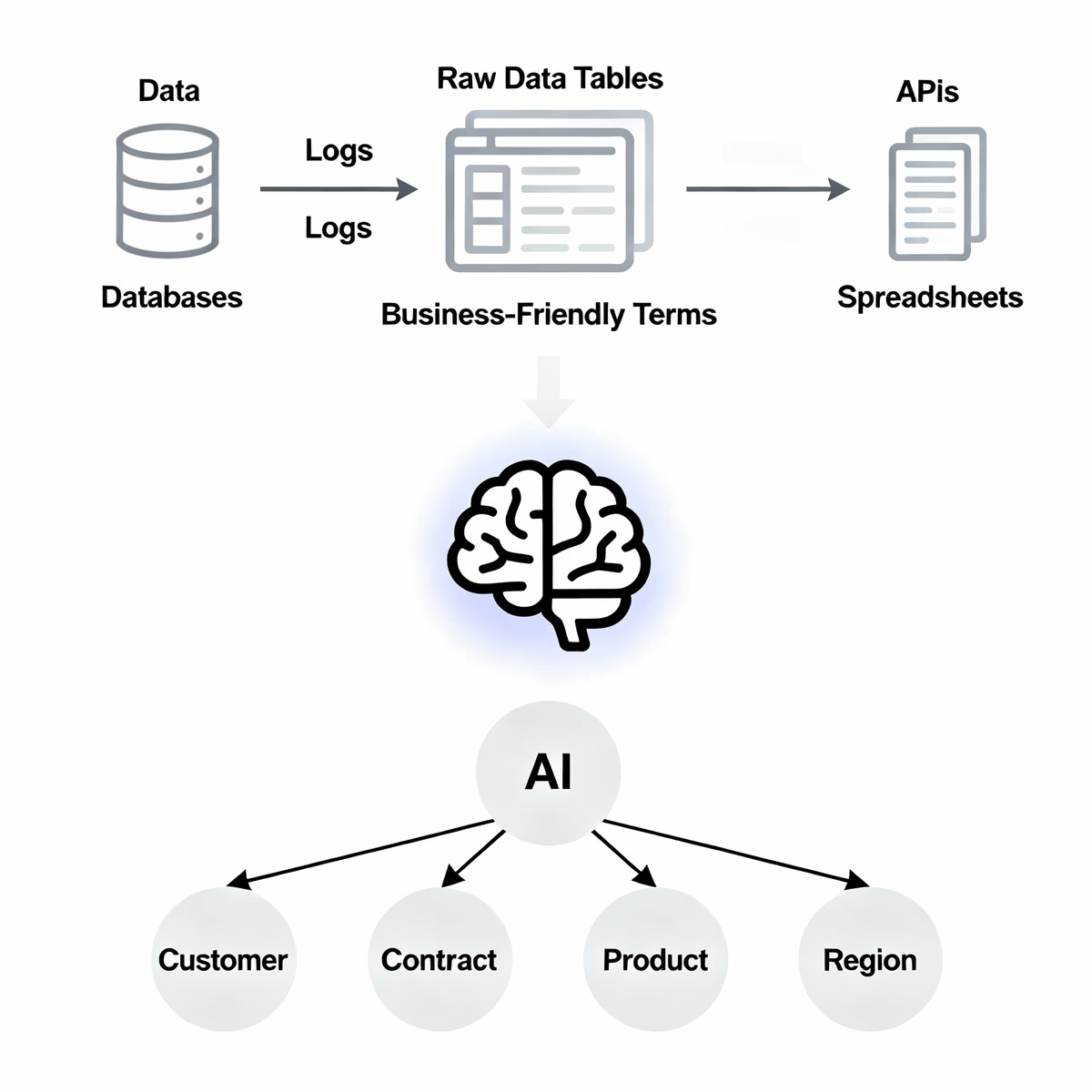
To ensure AI systems operate with precision and accuracy, the adoption of semantic layers and ontologies will become paramount. A semantic layer translates complex data into business-friendly terms, ensuring consistency in definitions across an organization. Ontologies, as more formal versions, provide a shared domain model with clear definitions and relationships (e.g., how a Customer relates to a Contract, or a Product to a Region). These structures, often built on standards like RDF and OWL, provide AI with a reliable map of the domain. This grounding in shared definitions prevents AI from making confident yet incorrect assertions due to conflicting data interpretations, especially crucial as AI assistants and agents become more prevalent in engineering and operations.
Platform Engineering 2.0: AI-Ready IDPs
Platform Engineering 2.0 marks an evolution in how internal developer platforms (IDPs) are conceived and implemented. These AI-ready IDPs are shared, self-service infrastructures that offer standardized “golden paths” for building, testing, deploying, and operating software. The focus shifts from merely automating CI/CD to embedding intelligence, security, and observability directly into the developer experience. This trend addresses the challenges of tool sprawl and inconsistent standards that arose from earlier DIY automation efforts, providing context-aware recommendations, enforcing policy-as-code, and integrating AI assistants to reduce cognitive load and accelerate delivery without compromising quality or governance.
Fortifying the Software Supply Chain
Software Supply Chain Security is emerging as the new baseline for DevSecOps. Moving beyond traditional vulnerability scanning, this trend emphasizes comprehensive security measures throughout the entire software lifecycle. This includes rigorous checks on third-party components, secure coding practices, and the implementation of Software Bill of Materials (SBOMs) to ensure transparency and traceability of all software elements. The goal is to mitigate risks associated with compromised dependencies and ensure the integrity of the software from development to deployment.
Standardized Observability and Engineering-Led FinOps
The increasing complexity of distributed systems necessitates Standardized Observability. The widespread adoption of OpenTelemetry is a key aspect of this trend, providing a unified approach to collecting telemetry data (logs, metrics, traces) across diverse systems. This standardization is crucial for gaining consistent insights into system performance and behavior, enabling faster troubleshooting and proactive issue resolution. Complementing this is the rise of Engineering-Led FinOps, where cloud cost management becomes an integral part of daily engineering responsibilities. This involves implementing automated cost guardrails and fostering a culture of cost awareness among development teams, ensuring efficient resource utilization and financial accountability.
Radiyal’s Commitment to Future-Proof Development
At Radiyal, we are dedicated to embracing these transformative development trends. By integrating agentic AI, leveraging semantic layers, and adopting advanced platform engineering and security practices, we empower our clients with future-proof solutions. Our commitment to standardized observability and FinOps ensures not only robust and secure applications but also optimized operational efficiency and cost-effectiveness. Partner with Radiyal to navigate the complexities of the evolving tech landscape and build innovative solutions that drive success.